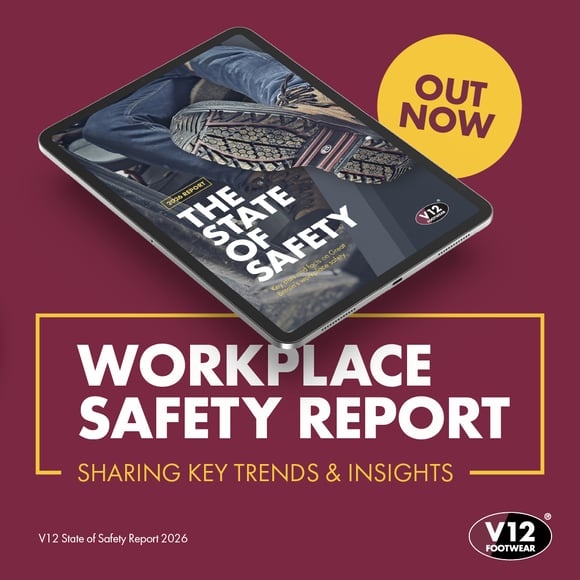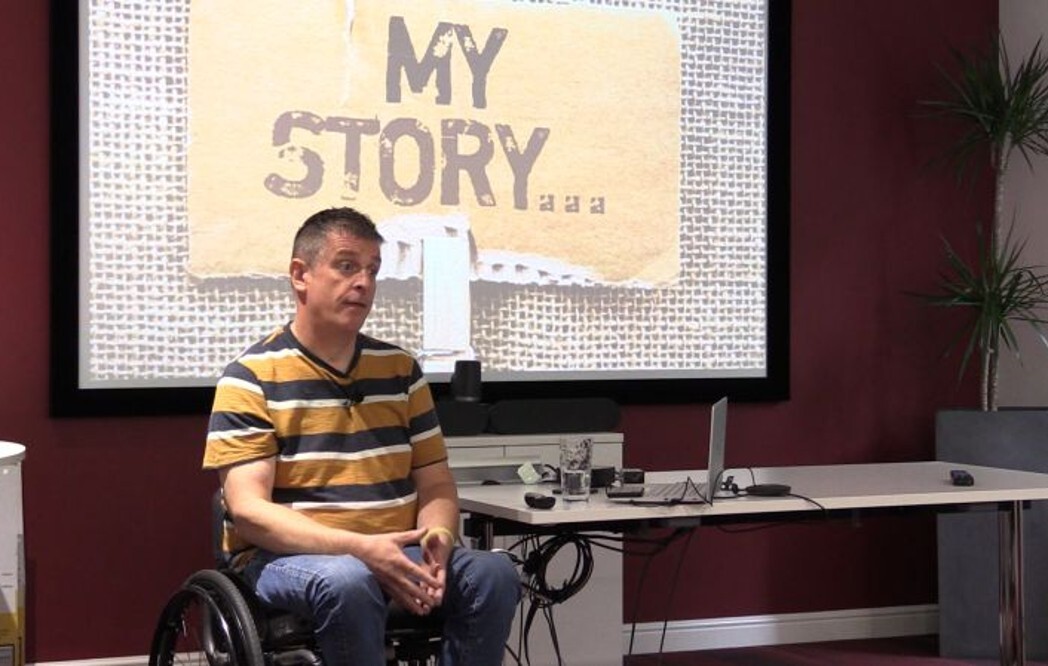
As part of V12 Footwear's State of Safety 2026 report, we interviewed global safety speaker Jason Anker to get his take on why workplace injuries and ill-health statistics have plateaued and even increased in some areas within the workplace in Great Britain.
As always, Jason brought to the table a huge range of eye-opening insights, in particular why well-being is still the missing link in improving workplace Health and Safety.1. We know all about safety regs and safety gear – but is safety culture improving?
We like to think we’ve come a long way, but since 2009 - when I started presenting - to the present day, falls from height stats are still broadly the same. They've plateaued because stopping accidents is not just about the safety procedures and equipment - it's about what makes a worker choose not to use them properly. What’s going on in their lives that makes them not care? If people are in a bad place and their mental health is low, tightening safety rules won’t make a lot of difference.
It sounds strange, but we can’t do much more from a safety perspective. It has to be about the well-being piece behind it. That’s what will improve safety culture.
2. What Role Should AI Play in Health and Safety?
AI needs to complement human knowledge and judgement. Also, in a safety space, AI will only really work if you have full compliance - then it just becomes about refining and innovating safety.
But I’ve seen some incredible stuff - really impressive technology that monitors and tracks workers’ site locations - so, used well in a transparent workforce, AI could have an amazing impact on Health and Safety in the workplace.
"Proactively reporting well-being, not reactively reporting an accident, is the next step..."
3. HSE stats show an increase in workplace accidents/ill-health compared to last year: what do you attribute this to?
There’s a big push for reporting accidents and injuries, and while that’s great, it’s reactive - we need to be proactive by adding in well-being to safety.
Feeling able to report what’s unsafe is good; some workforces are even incentivised to report accidents. This is a good idea, but I can think of ways this could backfire. And again, it’s only really effective if the well-being of the workforce is being factored in and actively worked on as a solution or prevention to further accidents.
Also, psychological safety has got bad PR, and we need to change it. Some people think it’s too 'fluffy' and that we don’t need to focus on improving well-being - like it’s outside of safety. But why would you not want to make well-being better? What’s wrong with showing vulnerability or encouraging people to share when they feel unsafe?
We need to get to a point where we have a culture where we can say to our manager on a Monday morning, “Something happened on Saturday, I’m in a bad place, my relationship is breaking down, I'm feeling horrendous - I'm not up for working today.” And that be OK. Because that could prevent an accident. Proactively reporting well-being, not reactively reporting an accident, is the next step I think.
"There are a lot of people out there doing demanding, dangerous work who are really struggling – emotionally, financially... the pressures are huge."
4. What’s the biggest innovation or safety milestone you’ve seen this year?
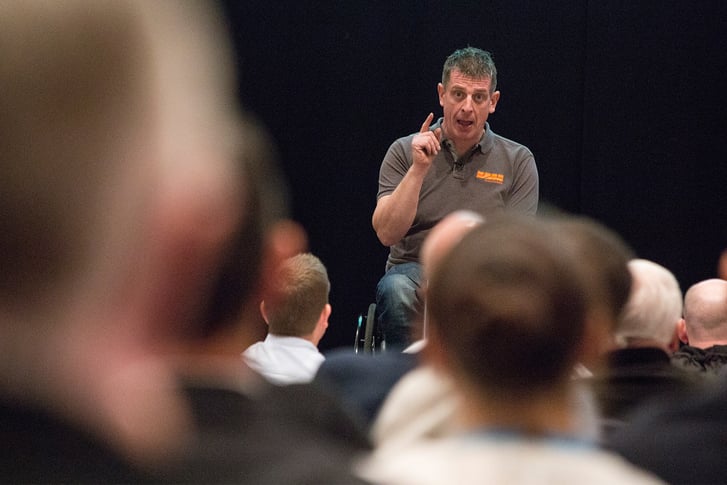
I can tell you what milestone I’d like to see! Well-being and Health and Safety having a one-ness to it. But at the moment, they’re disconnected.
A lot of people in safety can be reluctant to accept things needing to change. And for safety to improve, we’ve got to see it as ‘Well-being, Health and Safety.’ Because well-being is the glue that shapes and holds it all together. Being skeptical or dismissive about well-being's role is partly why the stats aren’t improving.
Presenteeism is also adding to the accident stats. Because presenteeism is a well-being issue, isn’t it? Coming to work dealing with pressure, tiredness, depression, distraction.
But if that person is involved in an accident or injury, we’ll often ask “What was unsafe?” or “Who made the wrong safety choice?” And not, “What was going on in that person’s life when they left the house and, under all that pressure, was just put to work?”
When I present to organisations, so many people tell me “I am you, just before the accident.” There are a lot of people out there doing demanding and dangerous work who are really struggling - emotionally, financially - the pressures are huge. They’re sleeping on the sofa, poor diets, drinking too much, exhausted, the pressure is coming from all angles. And their well-being is the key. Since COVID, people have become more aware of well-being, which is great, but we still have to talk more about its key place in safety.
Communication must also always be improving, from top down to bottom. And I’ve heard people say that communication and empathy are ‘soft skills,’ but that’s really minimising language. They should be called ‘essential skills.’ Because they are. Safety rules are important, but what about the human skills?
5. Is there enough ‘Mental Health’ in Health and Safety?
"Let’s start talking more about how financial well-being impacts mental health."
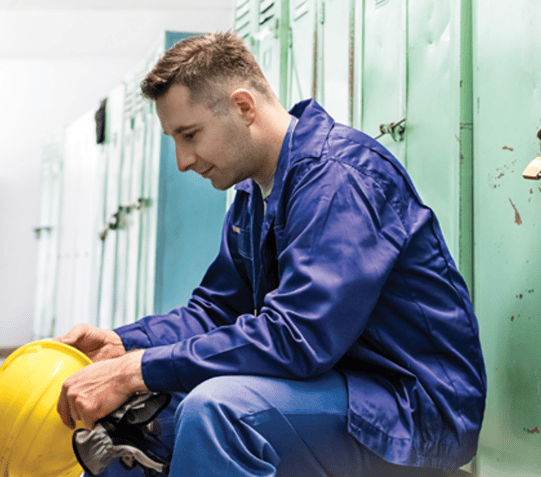
I’ve been banging this drum for years, and will continue to, but the missing piece is well-being: it must be linked behind and around safety. Because it’s how people feel that determines their choices, not how tight the safety regs are at their site.
Also, let’s start talking more about how financial well-being impacts mental health. If you’ve got relationship problems, you’re working away from home, you’re feeling low and under pressure, this affects mental health. But add financial worries and pressures? That’s a whole different level.
The profession with the highest number of people off with stress is teaching - but teachers get paid when they're signed off; builders don’t. So time off? If you’re financially struggling, it’s not going to happen. Not working means not earning.
I've spoken to many people in high-hazard roles - working from height, outdoors and for long hours, with massive pressure to deliver who are living in broken relationships.
They’ve broken up with the person they’ve been with but can’t afford to move out. They’re seeing new people in that house where their ex still lives. And there’s kids involved. Imagine then going to work from there, being expected to act safely and deliver. You’d think, “Forget it,” wouldn’t you? That’s poor well-being affecting safety choices - not poor safety choices in themselves.
The Future of Workplace Safety
Speaking with Jason reinforces a critical theme in the movement to improve Britain's state of safety: raising workplace protection and performance requires more than compliance.
We can strengthen regulations, we can complement best-practice leadership with AI-driven monitoring, and we can improve reporting systems, but if employees arrive at work overwhelmed by well-being factors such as financial pressure, domestic complications, exhaustion or a generally compromised mental health, those human factors will inevitably influence safety decisions long before any incident occurs.
Jason's call to action of Well-being, Health and Safety having a connectedness and to look beyond procedures to focus on the people behind them is surely key in the evolution of a happier, hazard-reduced workplace.
In V12 Footwear's report 'The State of Safety 2026,' Jason is joined by several other Health and Safety experts, all of whom answer the same 5 questions. And their answers are, for any Health and Safety stakeholder, and an absolute must-read. Click below to read your copy.